


Produkte
Höganäs BrazeLet® Lotpasten
Sie suchen eine effiziente Lotpastenlösung? Probieren Sie die Lotpasten von Höganäs aus. Sie haben einen höheren Metallgehalt und einen minimierten Polymergehalt im Vergleich zu herkömmlichen Lotpasten, was mehr Lötverbindungen pro Kilogramm Paste ermöglicht. Letztendlich reduzieren Sie den Instandhaltungsbedarf Ihrer Öfen. Darüber hinaus stellen Sie sicher, dass Ihre gelöteten Teile eine hohe Qualität behalten.
Unsere Lotpasten enthalten eine homogene Mischung aus Lotpulver (Massenanteil ca. 85-93 Prozent) und wasser- oder ölbasiertem, flussmittelfreiem Bindemittel. Hier bei Höganäs passen wir die Pastenrezeptur an Faktoren wie Applikationsmethode und Ofenbedingungen an. Dadurch wird sichergestellt, dass Sie für Ihre Anwendung die bestmöglichen Lötergebnisse erzielen können. Unsere Bindemittel wurden so entwickelt, dass ihr Polymergehalt minimiert ist.
Das rheologische Verhalten unserer Lotpasten ist auf die verschiedenen verwendeten Applikationsverfahren abgestimmt. Im Allgemeinen erfordern Dünnschicht-Applikationsverfahren wie Walzenbeschichtung, Siebdruck oder Sprühen eher flüssige Zusammensetzungen, während die Dispensierung oder das Drucken dicker Schichten eine höhere Viskosität erfordert.
Die hochwertigen Lotpasten von Höganäs basieren auf unserer breiten Auswahl an Hartloten. Darüber hinaus bieten wir kundenspezifische Lotpasten sowie verschiedene Arten von Pastenverpackungen an, um Ihre genauen Anforderungen zu erfüllen.
BrazeLet® Edelstahl-Lotpasten auf Eisenbasis
BrazeLet F86DW-8913
Iron-based brazing alloy
Höganäs’ unique iron-chromium based stainless brazing alloy BrazeLet F86 provides high strength joints when brazing stainless steel materials in vacuum or protective atmospheres (dry hydrogen or argon). The brazing alloy is particularly well suited for brazing heat exchangers with strict requirements on corrosion resistance and metal ion leaching, for example in drinking water or purified water applications, and it is completely copper free. Compared to nickel-based brazing alloys it offers a more attractive and stable cost. Compared to most of the standard nickel-based brazing alloys, BrazeLet F86 is able to fill larger gaps without brittle phase lines or cracks, which leads to a more reliable and safe brazing as well as more flexibility in part tolerances.
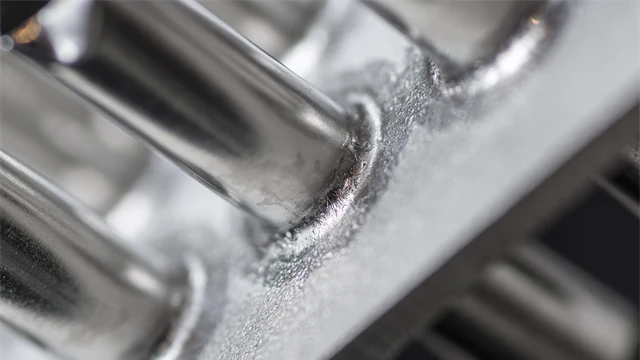
The water-based brazing paste BrazeLet F86DW-8913 can be used for dispensing applications, typically found on heat exchanger inlet and outlet tubes, housing to core joints and hole plate to tube joints. It can be dispensed by using standard air pressure dispensing units. For better precision, screw dispense units are recommended. The paste sticks on all bevel and vertical positions without the need of pre-drying but is easily removed using water.
BrazeLet F86DW-8913 properties allow reliable application in a wide speed range as a result of the dispensing equipment / automatisation as well as the needle diameter. The paste can be delivered in cartridges for use in automated applications or different sized cans for refilling of smaller cartridges for manual applications. For best performance, it is recommended to first stir it.
|
Nominal composition: Fe – 29Cr – 18Ni – 6.5Si – 6P – 0.5Nb Solvent type: Water |
||
BrazeLet F86P-9003
Iron-based brazing alloy
Höganäs’ unique iron-chromium based stainless brazing alloy BrazeLet F86 provides high strength joints when brazing stainless steel materials in vacuum or protective atmospheres (dry hydrogen or argon). The brazing alloy is particularly well suited for brazing heat exchangers with strict requirements on corrosion resistance and metal ion leaching, for example in drinking water or purified water applications, and it is completely copper free. Compared to nickel-based brazing alloys it offers a more attractive and stable cost. Compared to most of the standard nickel-based brazing alloys, BrazeLet F86 is able to fill larger gaps without brittle phase lines or cracks, which leads to a more reliable and safe brazing as well as more flexibility in part tolerances.
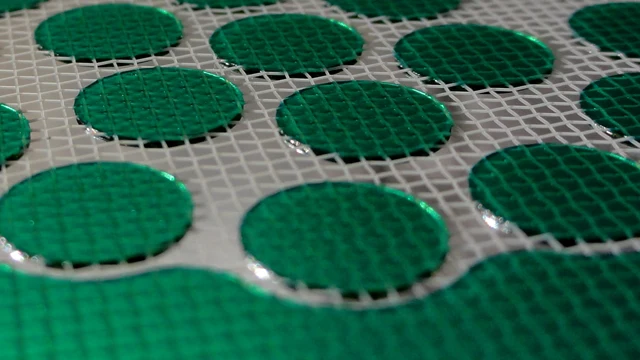
The brazing paste BrazeLet F86P-9003 is typically in use for printing thin paste layers of about 0.05 – 0.2 mm on flat plates, on top of structured plates or fins by use of screens or stencils. A typical application is the printing on parts for flat heat exchangers. The use of rubber squeegees is recommended. Reliable printing requires a precise positioning fixture combined with the use of vacuum table or clamping device. Typical printing speed is 300 mm/s. Thin printing lines should have a width of >0.3 mm, small dots diameter should be >1 mm. The solvent based brazing paste BrazeLet F86P-9003 increases productivity wherever drying of the paste is an issue. The paste has no settlement, and no stirring is required in the equipment. However, when opening a can from stock it is always recommended to stir the paste.
The printed parts can be dried with standard drying process (hot air) at 120 – 170 °C. The drying time varies depending on thermal mass, design of the parts and the used furnace and needs to be established.
|
Nominal composition: Fe – 29Cr – 18Ni – 6.5Si – 6P – 0.5Nb Solvent type: Oil |
||
BrazeLet F300DW-9007
Iron-based brazing alloy
Höganäs’ unique and patented iron-chromium based stainless brazing alloy BrazeLet F300-20 offers excellent wetting properties and great corrosion resistance particularly developed for brazing of stainless steel materials in vacuum or protective atmospheres (dry hydrogen or argon). With excellent wetting properties, low brazing temperature and high corrosion and oxidation resistance it is a good choice for automotive and industrial heat exchangers. It is well suited for drinking water applications with strict requirements on metal ion leaching. Compared to nickel-based brazing alloys it offers a more attractive and stable cost. Compared to most of the standard nickel-based brazing alloys, BrazeLet F300-20 is able to fill larger gaps without brittle phase lines or cracks, which leads to a more reliable and safe brazing as well as more flexibility in part tolerances.
The water-based brazing paste BrazeLet F300DW-9007 can be used for dispensing applications, typically found on heat exchanger inlet and outlet tubes, housing to core joints and hole plates to tube joints. It dries quickly and sticks to all bevel and vertical positions without the need of pre-drying. It can be easily removed with water. The paste has a very low polymer content and the binder is specially designed to decompose cleanly at low temperatures, as to minimise need for furnace maintenance, while preventing pre-oxidation of brazing filler metal powder in marginal furnace atmospheres. It shows extremely good residue-free brazing results in both vacuum and continuous belt furnace brazing.
BrazeLet F300DW-9007 properties allow reliable application in a wide speed range as a result of the dispensing equipment / automatisation as well as the needle diameter. The paste can be delivered in cartridges for use in automated applications or different sized cans. It can be frozen and brought back to room temperature for use without any damage to its properties.
|
Nominal composition: Fe – 20Ni – 20Cr – 7P – 6.5Cu – 4Si Solvent type: Water |
||
BrazeLet F300DW-9201
Iron-based brazing alloy
Höganäs’ unique and patented iron-chromium based stainless brazing alloy BrazeLet F300-20 offers excellent wetting properties and great corrosion resistance particularly developed for brazing of stainless steel materials in vacuum or protective atmospheres (dry hydrogen or argon). With excellent wetting properties, low brazing temperature and high corrosion and oxidation resistance it is a good choice for automotive and industrial heat exchangers. It is well suited for drinking water applications with strict requirements on metal ion leaching. Compared to nickel-based brazing alloys it offers a more attractive and stable cost. Compared to most of the standard nickel-based brazing alloys, BrazeLet F300-20 is able to fill larger gaps without brittle phase lines or cracks, which leads to a more reliable and safe brazing as well as more flexibility in part tolerances.
The brazing paste BrazeLet F300DW-9201 can be used for dispensing applications, typically found on heat exchanger inlet and outlet tubes, housing to core joints and hole plate to tube joints. It can be dispensed by using standard air pressure dispensing units. For better precision, screw dispense units are recommended. The paste sticks on all bevel positions without the need of pre-drying but is easily removed using water. The paste formulation offers the highest metal content of our standard dispensing pastes.
BrazeLet F300DW-9201 properties allow reliable application in a wide speed range as a result of the dispensing equipment / automatisation as well as the needle diameter. The paste can be delivered in cartridges for use in automated applications or different sized cans for refilling of smaller cartridges for manual applications. For best performance, it is recommended to first stir the paste.
|
Nominal composition: Fe – 20Ni – 20Cr – 7P – 6.5Cu – 4Si Solvent type: Water-born |
||
BrazeLet F300P-9002
Iron-based brazing alloy
Höganäs’ unique and patented iron-chromium based stainless brazing alloy BrazeLet F300-20 offers excellent wetting properties and great corrosion resistance particularly developed for brazing of stainless steel materials in vacuum or protective atmospheres (dry hydrogen or argon). With excellent wetting properties, low brazing temperature and high corrosion and oxidation resistance it is a good choice for automotive and industrial heat exchangers. It is well suited for drinking water applications with strict requirements on metal ion leaching. Compared to nickel-based brazing alloys it offers a more attractive and stable cost. Compared to most of the standard nickel-based brazing alloys, BrazeLet F300-20 is able to fill larger gaps without brittle phase lines or cracks, which leads to a more reliable and safe brazing as well as more flexibility in part tolerances.
The brazing paste BrazeLet F300P-9002 is typically in use for printing thin paste layers of about 0.05 – 0.2 mm on flat plates, on top of structured plates or fins by use of screens or stencils. A typical application is the printing on parts for flat heat exchangers. The use of rubber squeegees is recommended. Reliable printing requires a precise positioning fixture combined with the use of vacuum table or clamping device. Typical printing speed is 300 mm/s. Thin printing lines should have a width of >0.3 mm, small dots diameter should be >1 mm. The solvent based brazing paste BrazeLet F300P-9002 increases productivity wherever drying of the paste is an issue. The paste has no settlement, and no stirring is required in the equipment. However, when opening a can from stock it is always recommended to stir the paste.
The printed parts can be dried with standard drying process (hot air) at 120 – 170 °C. The drying time varies depending on thermal mass, design of the parts and the used furnace and needs to be established. After drying, the paste has excellent adhesion to the metal sheet.
|
Nominal composition: Fe – 20Ni – 20Cr – 7P – 6.5Cu – 4Si Solvent type: Oil
|
||
BrazeLet F300P-9003
Iron-based brazing alloy
Höganäs’ unique and patented iron-chromium based stainless brazing alloy BrazeLet F300-20 offers excellent wetting properties and great corrosion resistance particularly developed for brazing of stainless steel materials in vacuum or protective atmospheres (dry hydrogen or argon). With excellent wetting properties, low brazing temperature and high corrosion and oxidation resistance it is a good choice for automotive and industrial heat exchangers. It is well suited for drinking water applications with strict requirements on metal ion leaching. Compared to nickel-based brazing alloys it offers a more attractive and stable cost. Compared to most of the standard nickel-based brazing alloys, BrazeLet F300-20 is able to fill larger gaps without brittle phase lines or cracks, which leads to a more reliable and safe brazing as well as more flexibility in part tolerances.
The brazing paste BrazeLet F300P-9003 is typically in use for printing thin paste layers of about 0.05 – 0.2 mm on flat plates, on top of structured plates or fins by use of screens or stencils. A typical application is the printing on parts for flat heat exchangers. The use of rubber squeegees is recommended. Reliable printing requires a precise positioning fixture combined with the use of vacuum table or clamping device. Typical printing speed is 300 mm/s. Thin printing lines should have a width of >0.3 mm, small dots diameter should be >1 mm. The solvent based brazing paste BrazeLet F300P-9003 increases productivity wherever drying of the paste is an issue. The paste has no settlement, and no stirring is required in the equipment. However, when opening a can from stock it is always recommended to stir the paste.
The printed parts can be dried with standard drying process (hot air) at 120 – 170 °C. The drying time varies depending on thermal mass, design of the parts and the used furnace and needs to be established.
|
Nominal composition: Fe – 20Ni – 20Cr – 7P – 6.5Cu – 4Si Solvent type: Oil |
||
BrazeLet F300P-9012
Iron-based brazing alloy
Höganäs’ unique and patented iron-chromium based stainless brazing alloy BrazeLet F300-20 offers excellent wetting properties and great corrosion resistance particularly developed for brazing of stainless steel materials in vacuum or protective atmospheres (dry hydrogen or argon). With excellent wetting properties, low brazing temperature and high corrosion and oxidation resistance it is a good choice for automotive and industrial heat exchangers. It is well suited for drinking water applications with strict requirements on metal ion leaching. Compared to nickel-based brazing alloys it offers a more attractive and stable cost. Compared to most of the standard nickel-based brazing alloys, BrazeLet F300-20 is able to fill larger gaps without brittle phase lines or cracks, which leads to a more reliable and safe brazing as well as more flexibility in part tolerances.
The brazing paste BrazeLet F300P-9012 is typically in use for printing thick paste layers of about 0.2 to 0.6 mm on flat parts or on top of structured parts by use of screens or stencils. A typical application is printing of paste on hole plates of tube bundled heat exchangers. The use of rubber squeegees is recommended. Reliable printing requires precise positioning fixture tool by use of vacuum table or clamping device. Typical printing speed is 100 mm/s. Thin printing lines should at least have a width twice the printing thickness and the small dots diameter should be three times the printing thickness or greater. Printing accuracy is very precise as the paste maintains its shape during drying.
The solvent based BrazeLet F300P-9012 increases productivity wherever drying of the paste is an issue. It has no settlement, and no stirring is needed in the equipment. However, when opening a can from stock it is always recommended to stir the paste. The printed parts can be dried with standard drying process (hot air) at 120 – 170 °C. Here, the drying time needs to be established as it varies depending on thermal mass, parts design and the used furnace. After drying, the paste has excellent adhesion to the metal sheet.
|
Nominal composition: Fe – 20Ni – 20Cr – 7P – 6.5Cu – 4Si Solvent type: Oil |
||
BrazeLet F300R-9003
Iron-based brazing alloy
Höganäs’ unique and patented iron-chromium based stainless brazing alloy BrazeLet F300-20 offers excellent wetting properties and great corrosion resistance particularly developed for brazing of stainless steel materials in vacuum or protective atmospheres (dry hydrogen or argon). With excellent wetting properties, low brazing temperature and high corrosion and oxidation resistance it is a good choice for automotive and industrial heat exchangers. It is well suited for drinking water applications with strict requirements on metal ion leaching. Compared to nickel-based brazing alloys it offers a more attractive and stable cost. Compared to most of the standard nickel-based brazing alloys, BrazeLet F300-20 is able to fill larger gaps without brittle phase lines or cracks, which leads to a more reliable and safe brazing as well as more flexibility in part tolerances.
The brazing paste BrazeLet F300R-9003 can be used for roller coating fins or structured plates, typically found in flat heat exchanger designs. Depending on type of roller used the paste can be applied with thin layers either on top or on the side of the fin tips. Gap size between the paste roll and the scraper of 0.08 – 0.12 mm is recommended. The amount of paste is controlled by weight and is a function of the fins or structured plate design. BrazeLet F300R-9003 properties allow reliable application in a wide range of coating speeds, tested with good results from 3 m/min up to 20 m/min. The oil-based paste ensures reliable coating over time without drying on the roll. BrazeLet F300R-9003 has higher metal content and lower binder content compared to standard roller coating pastes, which decreases packaging and transportation needs for the same amount of brazing filler metal.
The coated fins can be dried with standard drying process (hot air) at 120 – 170 °C. The drying time depends on thermal mass, parts design and the used furnace and thus needs to be established. When dried, the paste has excellent adhesion to the metal sheet.
|
Nominal composition: Fe – 20Ni – 20Cr – 7P – 6.5Cu – 4Si Solvent type: Oil |
||
BrazeLet F300S-8701
Iron-based brazing alloy
Höganäs’ unique and patented iron-chromium based stainless brazing alloy BrazeLet F300-20 offers excellent wetting properties and great corrosion resistance particularly developed for brazing of stainless steel materials in vacuum or protective atmospheres (dry hydrogen or argon). With excellent wetting properties, low brazing temperature and high corrosion and oxidation resistance it is a good choice for automotive and industrial heat exchangers. It is well suited for drinking water applications with strict requirements on metal ion leaching. Compared to nickel-based brazing alloys it offers a more attractive and stable cost. Compared to most of the standard nickel-based brazing alloys, BrazeLet F300-20 is able to fill larger gaps without brittle phase lines or cracks, which leads to a more reliable and safe brazing as well as more flexibility in part tolerances.
The solvent based brazing paste BrazeLet F300S-8701 can be used for spraying structured plates, typically found in flat heat exchanger designs. It ensures reliable coating over time without drying the spraying nozzles. BrazeLet F300S-8701 has no settlement, and no stirring is needed in the equipment. However, when opening a can from stock it is always recommended to stir the paste.
The sprayed parts can be dried with standard drying process (hot air) at 120 – 170 °C. The drying time depends on thermal mass, parts design and the used furnace and thus needs to be established. After drying, the paste has excellent adhesion to the metal sheet.
|
Nominal composition: Fe – 20Ni – 20Cr – 7P – 6.5Cu – 4Si Solvent type: Oil |
||
BrazeLet® BNi Pasten
BrazeLet Ni2DW-9201
Nickel-based brazing alloy
The nickel-based brazing alloy BrazeLet BNi2 provides high strength when brazing stainless steel material in vacuum or protective atmospheres (hydrogen or argon). It provides excellent high temperature strength and oxidation resistance. Joint properties can be further improved by employing a diffusion hold after brazing. It is a versatile brazing filler metal used in aerospace, automotive and industrial applications such as heat exchangers and turbines.
The brazing paste BrazeLet Ni2DW-9201 can be used for dispensing applications, typically found on heat exchanger inlet and outlet tubes, housing to core joints and hole plate to tube joints. It can be dispensed by using standard air pressure dispensing units. For better precision, screw dispense units are recommended. The paste sticks on all bevel positions without the need of pre-drying but is easily removed using water. The paste formulation offers the highest metal content of our standard dispensing pastes.
BrazeLet Ni2DW-9201 properties allow reliable application in a wide speed range as a result of the dispensing equipment / automatisation as well as the needle diameter. The paste can be delivered in cartridges for use in automated applications or different sized cans for refilling of smaller cartridges for manual applications. For best performance, it is recommended to first stir the paste.
|
Nominal composition: Ni – 7Cr – 4.5Si – 3Fe – 3B Solvent type: Water-born |
||
BrazeLet Ni5DW-9201
Nickel-based brazing alloy
The nickel-based brazing alloy BrazeLet BNi5 has good wetting behaviour on stainless steels and nickel-based superalloys and is suitable for brazing in vacuum or protective atmospheres (hydrogen or argon). The high level of alloyed chromium results in a good hot gas and acid corrosion resistance. The high melting range of BrazeLet BNi5 makes it suitable for applications working at very high temperatures, for instance EGR coolers for trucks, automotive metal catalytic converters and turbine vanes. It is also a commonly used filler material for industrial heat exchangers. Joint properties can be further improved by employing a diffusion hold after brazing.
The brazing paste BrazeLet Ni5DW-9201 can be used for dispensing applications, typically found on heat exchanger inlet and outlet tubes, housing to core joints and hole plate to tube joints. It can be dispensed by using standard air pressure dispensing units. For better precision, screw dispense units are recommended. The paste sticks on all bevel positions without the need of pre-drying but is easily removed using water. The paste formulation offers the highest metal content of our standard dispensing pastes.
BrazeLet Ni5DW-9201 properties allow reliable application in a wide speed range as a result of the dispensing equipment / automatisation as well as the needle diameter. The paste can be delivered in cartridges for use in automated applications or different sized cans for refilling of smaller cartridges for manual applications. For best performance, it is recommended to first stir the paste.
|
Nominal composition: Ni – 19Cr – 10.1Si Solvent type: Water-born |
||
BrazeLet Ni7DW-9201
Nickel-based brazing alloy
The nickel-based brazing alloy BrazeLet BNi7 is a free-flowing material suitable for brazing stainless steels. It is suitable for brazing in vacuum or protective atmospheres (dry hydrogen or argon). It allows brazing at lower temperatures than most of the other nickel-based brazing alloys. It is particularly suitable for brazing deep narrow joints as it maintains the excellent flowability with limited P diffusion into most base materials. It is recommended that gaps do not exceed 30 µm as wider gaps risk the formation of a crack-sensitive brittle centre line. Typical applications for this brazing alloy include thin-walled components such as honeycomb seals, industrial heat exchangers and tubular heating elements for drinking water applications.
The brazing paste BrazeLet Ni7DW-9201 can be used for dispensing applications, typically found on heat exchanger inlet and outlet tubes, housing to core joints and hole plate to tube joints. It can be dispensed by using standard air pressure dispensing units. For better precision, screw dispense units are recommended. The paste sticks on all bevel positions without the need of pre-drying but is easily removed using water. The paste formulation offers the highest metal content of our standard dispensing pastes.
BrazeLet Ni7DW-9201 properties allow reliable application in a wide speed range as a result of the dispensing equipment / automatization as well as the needle diameter. The paste can be delivered in cartridges for use in automated applications or different sized cans for refilling of smaller cartridges for manual applications. For best performance, it is recommended to first stir the paste.
|
Nominal composition: Ni – 14Cr – 10.1P Solvent type: Water-born |
||
BrazeLet Ni613D-9004
Nickel-based brazing alloy
The nickel-based brazing alloy BrazeLet Ni613, features a best in class wetting behaviour on stainless steel material in vacuum or protective atmosphere (dry hydrogen or argon). Its high level of alloyed chromium results in a superior hot gas and acid corrosion resistance. The brazing alloy is best suited for brazing heat exchangers such as exhaust gas recirculation (EGR) coolers in automotive or drinking water applications. Compared to most of the standard nickel-based brazing alloys, BrazeLet Ni613 is able to fill larger gaps without brittle phase lines or cracks. The resulting micro hardness in the brazed joint microstructure is less than half when compared to BrazeLet BNi5. This leads to a more reliable and safe brazing as well as more flexibility in part tolerances.
The brazing paste BrazeLet Ni613D-9004 can be used for dispensing applications, typically found on heat exchanger inlet and outlet tubes, housing to core joints and hole plate to tube joints. It can be dispensed by using standard air pressure dispensing units. For better precision, screw dispense units are recommended. The paste sticks on all bevel and vertical positions without the need of pre-drying but is easily removed using aliphatic solvents.
BrazeLet Ni613D-9004 properties allow reliable application in a wide speed range as a result of the dispensing equipment / automatisation as well as the needle diameter. The paste can be delivered in cartridges for use in automated applications or different sized cans for refilling of smaller cartridges for manual applications. It has no settlements. However, when opening a can from stock it is always recommended to stir the paste.
|
Nominal composition: Ni – 29Cr – 6P – 4Si Solvent type: Oil |
||
BrazeLet Ni613DW-9003
Nickel-based brazing alloy
The nickel-based brazing alloy BrazeLet Ni613, features a best in class wetting behaviour on stainless steel material in vacuum or protective atmosphere (dry hydrogen or argon). Its high level of alloyed chromium results in a superior hot gas and acid corrosion resistance. The brazing alloy is best suited for brazing heat exchangers such as exhaust gas recirculation (EGR) coolers in automotive or drinking water applications. Compared to most of the standard nickel-based brazing alloys, BrazeLet Ni613 is able to fill larger gaps without brittle phase lines or cracks. The resulting micro hardness in the brazed joint microstructure is less than half when compared to BrazeLet BNi5. This leads to a more reliable and safe brazing as well as more flexibility in part tolerances.
The water-based brazing paste BrazeLet Ni613DW-9003 can be used for dispensing applications, typically found on heat exchanger inlet and outlet tubes, housing to core joints and hole plate to tube joints. It can be dispensed by using standard air pressure dispensing units. For better precision, screw dispense units are recommended. The paste sticks on all bevel and vertical positions without the need of pre-drying but is easily removed using water.
BrazeLet Ni613DW-9003 properties allow reliable application in a wide speed range as a result of the dispensing equipment / automatisation as well as the needle diameter. The paste can be delivered in cartridges for use in automated applications or different sized cans for refilling of smaller cartridges for manual applications. For best performance, it is recommended to first stir it.
|
Nominal composition: Ni – 29Cr – 6P – 4Si Solvent type: Water |
||
BrazeLet Ni613DW-9201
Nickel-based brazing alloy
The nickel-based brazing alloy BrazeLet Ni613, features a best in class wetting behaviour on stainless steel material in vacuum or protective atmosphere (dry hydrogen or argon). Its high level of alloyed chromium results in a superior hot gas and acid corrosion resistance. The brazing alloy is best suited for brazing heat exchangers such as exhaust gas recirculation (EGR) coolers in automotive or drinking water applications. Compared to most of the standard nickel-based brazing alloys, BrazeLet Ni613 is able to fill larger gaps without brittle phase lines or cracks. The resulting micro hardness in the brazed joint microstructure is less than half when compared to BrazeLet BNi5. This leads to a more reliable and safe brazing as well as more flexibility in part tolerances.
The brazing paste BrazeLet Ni613DW-9201 can be used for dispensing applications, typically found on heat exchanger inlet and outlet tubes, housing to core joints and hole plate to tube joints. It can be dispensed by using standard air pressure dispensing units. For better precision, screw dispense units are recommended. The paste sticks on all bevel positions without the need of pre-drying but is easily removed using water. The paste formulation offers the highest metal content of our standard dispensing pastes.
BrazeLet Ni613DW-9201 properties allow reliable application in a wide speed range as a result of the dispensing equipment / automatisation as well as the needle diameter. The paste can be delivered in cartridges for use in automated applications or different sized cans for refilling of smaller cartridges for manual applications. For best performance, it is recommended to first stir the paste.
|
Nominal composition: Ni – 29Cr – 6P – 4Si Solvent type: Water-born |
||
BrazeLet Ni613P-9012
Nickel-based brazing alloy
The nickel-based brazing alloy BrazeLet Ni613, features a best in class wetting behaviour on stainless steel material in vacuum or protective atmosphere (dry hydrogen or argon). Its high level of alloyed chromium results in a superior hot gas and acid corrosion resistance. The brazing alloy is best suited for brazing heat exchangers such as exhaust gas recirculation (EGR) coolers in automotive or drinking water applications. Compared to most of the standard nickel-based brazing alloys, BrazeLet Ni613 is able to fill larger gaps without brittle phase lines or cracks. The resulting micro hardness in the brazed joint microstructure is less than half when compared to BrazeLet BNi5. This leads to a more reliable and safe brazing as well as more flexibility in part tolerances.
The brazing paste BrazeLet Ni613P-9012 is typically in use for printing thick paste layers of about 0.2 to 0.6 mm on flat parts or on top of structured parts by use of screens or stencils. A typical application is printing of paste on hole plates of tube bundled heat exchangers. The use of rubber squeegees is recommended. Reliable printing requires precise positioning fixture tool by use of vacuum table or clamping device. Typical printing speed is 100 mm/s. Thin printing lines should at least have a width twice the printing thickness and the small dots diameter should be three times the printing thickness or greater. Printing accuracy is very precise as the paste maintains its shape during drying.
The solvent based BrazeLet Ni613P-9012 increases productivity wherever drying of the paste is an issue. It has no settlement, and no stirring is needed in the equipment. However, when opening a can from stock it is always recommended to stir the paste. The printed parts can be dried with standard drying process (hot air) at 120 – 170 °C. Here, the drying time needs to be established as it varies depending on thermal mass, parts design and the used furnace. After drying, the paste has excellent adhesion to the metal sheet.
|
Nominal composition: Ni – 29Cr – 6P – 4Si Solvent type: Oil |
||
BrazeLet Ni613R-9003
Nickel-based brazing alloy
The nickel-based brazing alloy BrazeLet Ni613, features a best in class wetting behaviour on stainless steel material in vacuum or protective atmosphere (dry hydrogen or argon). Its high level of alloyed chromium results in a superior hot gas and acid corrosion resistance. The brazing alloy is best suited for brazing heat exchangers such as exhaust gas recirculation (EGR) coolers in automotive or drinking water applications. Compared to most of the standard nickel-based brazing alloys, BrazeLet Ni613 is able to fill larger gaps without brittle phase lines or cracks. The resulting micro hardness in the brazed joint microstructure is less than half when compared to BrazeLet BNi5. This leads to a more reliable and safe brazing as well as more flexibility in part tolerances.
The brazing paste BrazeLet Ni613R-9003 can be used for roller coating fins or structured plates, typically found in flat heat exchanger designs. Depending on type of roller used the paste can be applied with thin layers either on top or on the side of the fin tips. Gap size between the paste roll and the scraper of 0.08 – 0.12 mm is recommended. The amount of paste is controlled by weight and is a function of the fins or structured plate design. BrazeLet Ni613R-9003 properties allow reliable application in a wide range of coating speeds, tested with good results from 3 m/min up to 20 m/min. The oil-based paste ensures reliable coating over time without drying on the roll. BrazeLet Ni613R-9003 has higher metal content and lower binder content compared to standard roller coating pastes, which decreases packaging and transportation needs for the same amount of brazing filler metal.
The coated fins can be dried with standard drying process (hot air) at 120 – 170 °C. The drying time depends on thermal mass, parts design and the used furnace and thus needs to be established. When dried, the paste has excellent adhesion to the metal sheet.
|
Nominal composition: Ni – 29Cr – 6P – 4Si Solvent type: Oil |
||
Kontakt

Vertrieb & technischer Support
Kontaktieren Sie Ihren Vertriebsmitarbeiter für weitere Informationen und Fragen.
Kontaktieren Sie uns
Kontaktformular
Ansprechpartner
Technical area:
Hartlöten
Wählen Sie Ihr Land *
Art des Kontakts *
Vertrieb
Vertrieb
Technischer Support
Vorname *
Nachname *
Firma *
Arbeitsgebiet *
CEO / Eigentümer
Einkauf
Entwicklungsingenieur
Unternehmensentwickler
Maschinenführer
Sonstiges
E-Mail *
Telefon Arbeitsplatz *
Ihre Nachricht *
Datenschutzerklärung
Ich bin damit einverstanden, dass Höganäs meine personenbezogenen Daten dafür nutzt, Kontakt mit mir aufzunehmen. Meine Kontaktdaten können auch zu Marketingzwecken verwendet werden, beispielsweise für Newsletter und andere relevante Informationen. Die Daten werden nicht an Dritte weitergegeben. Mit meiner Einwilligung bestätigte ich außerdem, dass ich älter als 16 Jahre bin.
Weitere Informationen über unseren Umgang mit personenbezogenen Daten sind in unserer Datenschutzerklärung zu finden.
Ehe Sie weitermachen können, müssen Sie erst die Nutzungsbedingungen akzeptieren.